Training Facility and Gym: 2 DeLorme Drive, Yarmouth, Maine 04097 | 207-212-8371

PROVIDING SIMPLE, EFFECTIVE, AND PERSONALIZED SOLUTIONS
ARTICLES
When the Weight Room Starts Showing Up on the Field
"The goal of training isn't just to get stronger. It's to make that strength useful when the game demands it."
Imagine spending three months getting stronger.
Your squat improves.
Your single-leg strength improves.
You're moving more weight than you were when you started.
That's great.
Those are meaningful accomplishments.
But here's the question I'd eventually want to answer:
What changed when you went back to your sport?
Because at some point, the conversation has to move beyond the weight room.
The numbers matter.
But what those numbers allow you to do matters even more.
Strength Is Only the Beginning
Athletes often get excited when they add weight to the bar.
And they should.
Progress is worth celebrating.
But strength is only one piece of athletic performance.
You still have to be able to use it.
The strongest athlete isn't always the most effective athlete.
The athlete who can apply that strength under the demands of competition often has the advantage.
That's where transfer becomes important.
What Transfer Looks Like
The most meaningful feedback usually doesn't sound like:
"My squat went up 40 pounds."
It sounds more like:
"I'm harder to knock off the ball."
"I feel more stable when I land."
"I can change direction without losing my position."
Those comments grab my attention.
Because they reflect something happening during competition.
A soccer player may notice they can maintain possession more effectively when challenged.
A basketball player may feel more balanced after absorbing contact near the basket.
A football player may find they're able to stay organized and accelerate more effectively after changing direction.
Those are real-world outcomes.
And that's the whole point of training.
Strength Without Control Has Limits
An athlete can have strong legs and still struggle to control their body on one leg.
They can have a strong core and still lose position when an opponent makes contact.
They can lift impressive weights and still struggle to transfer that strength into sport-specific situations.
Why?
Because strength and movement quality are connected.
The ability to produce force is important.
The ability to organize and control that force is equally important.
Without control, strength often becomes harder to use when movement gets fast and unpredictable.
Building Better Athletes, Not Just Stronger Athletes
That's why we don't view strength training as separate from movement quality.
The goal isn't simply to create stronger muscles.
The goal is to develop athletes who can:
Produce force efficiently
Absorb force effectively
Maintain position under pressure
Control movement during rapid changes of direction
Stay balanced while reacting to competition
These qualities work together.
And when they improve together, athletes build a stronger foundation for sport performance.
The Weight Room Supports the Game
The weight room doesn't guarantee someone will become a better player.
There are too many other variables involved.
Skill matters.
Decision-making matters.
Experience matters.
Game awareness matters.
But strength training can improve the physical qualities that support all of those things.
It can give athletes more options when they're competing.
More stability.
More resilience.
More confidence.
More physical capacity when the game becomes demanding.
The Feedback That Matters Most
One of my favorite moments as a coach is when an athlete mentions something that used to be difficult no longer feels difficult.
Not because we pointed it out.
Because they noticed it themselves.
That's meaningful.
It tells us the training isn't just improving test scores and gym numbers.
It's influencing situations that matter to the athlete.
The situations they encounter during games.
The situations that determine performance.
When Strength Becomes Useful
Getting stronger is a great goal.
But strength becomes much more valuable when it shows up where you need it most.
When you hold your position through contact.
When you land with confidence.
When you change direction without losing balance.
When fatigue doesn't affect your movement as much as it used to.
That's when the work in the weight room starts showing up on the field.
And ultimately, that's what we're after.
Not just better numbers in training.
Better physical capabilities when those numbers actually matter.
— Coach Shelby & The Shelby Trained Team

Health & Wellness - differently!

The Simplementation System is a health & wellness-based system that is built upon successfully implement evidence-based actions into people's busy lives.
What are your specific fitness goals?
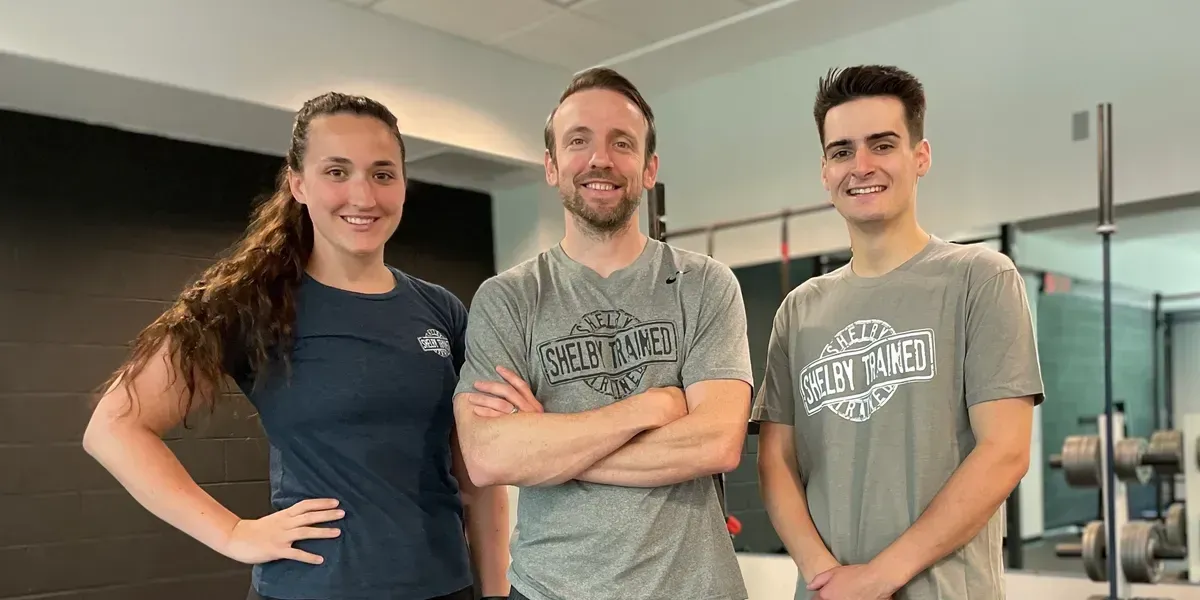
Our Team believes in providing a personalized approach to ensure your results. We are purposeful in everything from the workouts, to the coaching, to the fun/safe environment.
Learn why people seek us out to help them change their lives!
ARTICLES

July 23, 2021
Not Popular, But It's Science
July 1, 2021
How to train around injuries

July 1, 2021
Speed - what it really is

April 28, 2021
The X factor
Copyright © 2023 Shelby Trained - All Rights Reserved.