Training Facility and Gym: 2 DeLorme Drive, Yarmouth, Maine 04097 | 207-212-8371

PROVIDING SIMPLE, EFFECTIVE, AND PERSONALIZED SOLUTIONS
ARTICLES
Are You Actually Getting Better, or Just Working Harder?
"Working hard is important. But progress isn't measured by how exhausted you feel. It's measured by whether the things that matter are actually improving."
Here's a question I think more athletes should ask themselves:
How do you know you're improving?
Not how hard you're working.
Not how tired you feel after training.
But whether you're actually getting better.
Because those aren't always the same thing.
I've seen athletes finish workouts completely exhausted.
Sweating.
Breathing hard.
Feeling like they gave everything they had.
And that's not necessarily a bad thing.
But fatigue doesn't automatically mean progress.
An athlete can work incredibly hard without improving the qualities that matter most for their sport.
Hard Work Isn't the Same as Adaptation
Many athletes use discomfort as their scorecard.
If they're sore, the workout must have worked.
If they're exhausted, they must be improving.
If they're completely drained afterward, they feel productive.
The problem is that those feelings don't necessarily tell us whether adaptation is occurring.
Training is supposed to create a stimulus.
Adaptation is the response.
The goal isn't simply to work hard.
The goal is to become more capable.
That's an important difference.
Why Tracking Matters
Research and coaching experience consistently support the value of monitoring performance over time.
Not because every workout needs to produce a personal record.
But because individual training sessions rarely tell the whole story.
Performance fluctuates.
Sleep changes.
Stress changes.
Recovery changes.
Readiness changes.
Some days you'll feel incredible.
Other days you'll feel flat.
Neither day tells the full story by itself.
That's why trends matter more than isolated performances.
A Vertical Jump Example
Imagine an athlete working to improve their vertical jump.
They train consistently for eight weeks.
Some training sessions feel explosive.
Other sessions feel sluggish.
If they evaluate progress solely based on how they felt that day, they might think they're not improving at all.
But then they look at the data.
Maybe their average jump height has increased.
Maybe their best jump has improved.
Maybe the gap between their best and worst jumps has become smaller.
Maybe they're producing quality jumps more consistently.
Those are meaningful signs of improvement.
And they may have nothing to do with how tired they felt during any single workout.
Performance Leaves Clues
The best indicators of progress often show up in measurable trends.
For athletes, that might include:
Sprint times
Vertical jump height
Change-of-direction testing
Strength numbers
Work capacity
Recovery between efforts
Movement quality
Skill execution consistency
Not every improvement is dramatic.
Sometimes the change is subtle.
The athlete who used to struggle maintaining mechanics late in practice can now stay consistent.
The athlete who once needed three extra recovery steps after a cut now recovers immediately.
The athlete who previously lost position under fatigue now stays organized.
Those improvements count.
Look for Patterns, Not Single Days
One of the biggest mistakes athletes make is judging themselves based on one workout.
A great day doesn't guarantee progress.
A bad day doesn't mean failure.
What matters is the pattern.
Ask yourself:
Am I stronger than I was three months ago?
Am I moving more efficiently?
Am I recovering faster?
Am I more consistent?
Am I better prepared for the demands of my sport?
Those questions reveal much more than whether a workout felt difficult.
Because progress usually happens gradually.
And gradual change is easiest to see when you zoom out.
Effort Matters. Measurement Matters Too.
To be clear, effort is important.
Nobody improves without putting in the work.
But effort alone isn't enough.
The purpose of tracking isn't to create pressure.
It's to create clarity.
Because when you know what's improving, you gain confidence that the work is moving you in the right direction.
And when something isn't improving, you can adjust before wasting valuable training time.
A Question Worth Asking
Here's something I want you to think about this week:
If I asked you to show me how you've improved over the last three months, what would you point to?
Would you have measurable evidence?
A faster sprint?
A stronger lift?
A higher jump?
Better conditioning?
More consistent performance?
Or would you simply tell me you've been working hard?
Because hard work absolutely matters.
But understanding whether that hard work is creating meaningful change is what makes training effective.
Don't just chase effort.
Track adaptation.
That's where real progress lives.
— Coach Shelby & The Shelby Trained Team

Health & Wellness - differently!

The Simplementation System is a health & wellness-based system that is built upon successfully implement evidence-based actions into people's busy lives.
What are your specific fitness goals?
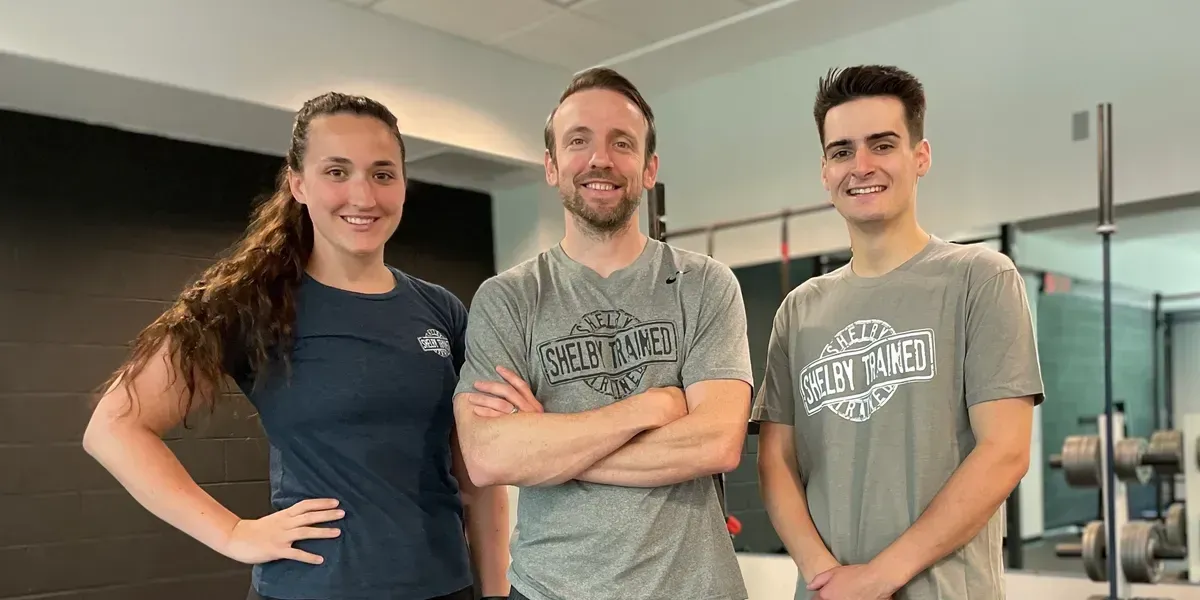
Our Team believes in providing a personalized approach to ensure your results. We are purposeful in everything from the workouts, to the coaching, to the fun/safe environment.
Learn why people seek us out to help them change their lives!
ARTICLES
July 23, 2021
Not Popular, But It's Science
July 1, 2021
How to train around injuries

July 1, 2021
Speed - what it really is

April 28, 2021
The X factor
Copyright © 2023 Shelby Trained - All Rights Reserved.