Training Facility and Gym: 2 DeLorme Drive, Yarmouth, Maine 04097 | 207-212-8371

PROVIDING SIMPLE, EFFECTIVE, AND PERSONALIZED SOLUTIONS
ARTICLES
You Spend More Time on One Leg Than You Think
"Walking may look like a two-legged activity, but much of it is really a series of controlled single-leg balances."
Here's something you can pay attention to today.
Every time you take a step, there's a brief moment when one leg is supporting most, if not all, of your body weight.
It happens so quickly that you probably never think about it.
Until that single-leg position starts feeling less stable.
Then things begin to change.
You shorten your steps.
You walk a little slower.
You look down more often.
You become more cautious stepping over obstacles.
And suddenly movements that once felt automatic require a little more attention.
Walking Is More Than Moving Forward
It's easy to assume that if walking becomes less comfortable, the solution is simply to walk more.
And walking is fantastic.
I want people walking.
But walking and single-leg control aren't exactly the same thing.
Walking exposes your body to balance challenges.
Single-leg training helps prepare your body to handle them.
That's an important distinction.
Because every step requires a coordinated effort from multiple areas of the body.
What Happens When You Stand on One Leg
Think about what your body is doing during that brief moment of support.
Your hip muscles help keep your pelvis level.
Your ankle makes continuous adjustments to keep you balanced.
Your trunk helps keep your body organized over your supporting foot.
Your nervous system is constantly gathering information and making corrections.
All of that happens in a fraction of a second.
That's a lot of work packed into what appears to be a simple task.
A Simple Exercise to Try
Here's something I'd like you to experiment with.
Stand next to a sturdy countertop, table, or railing.
Place one hand lightly on it for support.
Shift your weight onto one foot.
Lift the opposite foot just slightly off the ground.
Hold the position for a few seconds.
Then switch sides.
That's it.
Simple doesn't mean ineffective.
In fact, simple exercises often reveal the most.
Pay Attention to What You Notice
As you perform the exercise, ask yourself:
Does one side feel more stable than the other?
Do you immediately lean your entire body over the support leg?
Does your ankle feel like it's constantly searching for balance?
Can you breathe normally?
Or do you become tense as soon as you lift your foot?
These observations provide useful information.
Not because they indicate something is wrong.
But because they help identify where you may benefit from a little more practice.
Support Is Not Cheating
A common mistake is thinking balance exercises only count if you're completely unsupported.
That's not true.
In many cases, using support is the smartest place to start.
I'd rather see someone lightly touching a countertop and maintaining good control than removing all support and spending the entire exercise trying not to fall.
The goal isn't to make the exercise look difficult.
The goal is to improve stability.
As your confidence improves, you can gradually rely on the support less.
Why This Matters in Everyday Life
Single-leg control shows up more often than most people realize.
When you're:
Putting on your pants
Stepping into the shower
Walking across uneven ground
Stepping over a curb
Climbing stairs
Changing direction while walking
Your body often has to trust one leg at a time.
The stronger and more coordinated that support becomes, the more comfortable these activities tend to feel.
Build Confidence Before You Need It
This kind of training may not look impressive.
You're not lifting heavy weights.
You're not doing anything flashy.
But it addresses a quality that influences many everyday movements.
And I'd rather help someone build confidence and control now than wait until routine activities start feeling uncertain.
Because maintaining independence often comes down to simple abilities.
The ability to balance.
The ability to control your weight.
The ability to trust one leg while the other moves.
And whether you realize it or not, you're practicing that skill every time you take a step.
— Coach Shelby & The Shelby Trained Team

Health & Wellness - differently!

The Simplementation System is a health & wellness-based system that is built upon successfully implement evidence-based actions into people's busy lives.
What are your specific fitness goals?
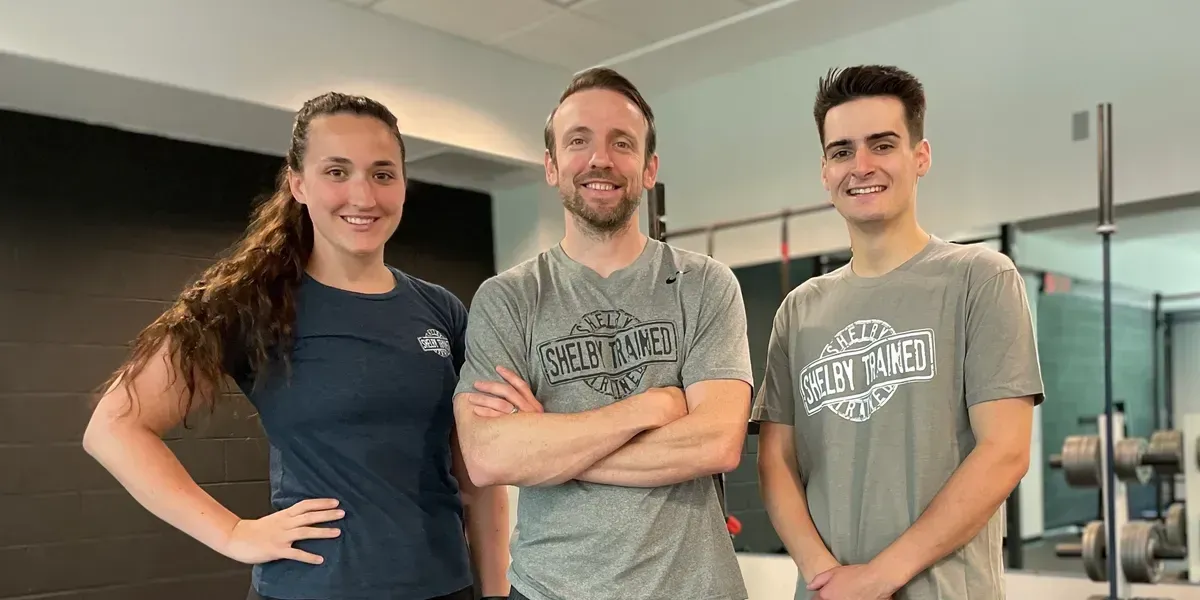
Our Team believes in providing a personalized approach to ensure your results. We are purposeful in everything from the workouts, to the coaching, to the fun/safe environment.
Learn why people seek us out to help them change their lives!
ARTICLES

July 23, 2021
Not Popular, But It's Science
July 1, 2021
How to train around injuries

July 1, 2021
Speed - what it really is

April 28, 2021
The X factor
Copyright © 2023 Shelby Trained - All Rights Reserved.