Training Facility and Gym: 2 DeLorme Drive, Yarmouth, Maine 04097 | 207-212-8371

PROVIDING SIMPLE, EFFECTIVE, AND PERSONALIZED SOLUTIONS
ARTICLES
Your Joints Aren't Supposed to Stop Moving as You Age
"Getting older doesn't mean your joints are supposed to stop moving. It means maintaining movement becomes even more important."
There's a common belief I hear when people talk about getting older.
"My joints just aren't what they used to be."
And sometimes that statement comes with an assumption.
That stiffness, limited movement, and difficulty with everyday activities are simply things we have to accept as part of aging.
But I think there's an important part of that conversation we're missing.
Aging can influence joint health and physical function.
That doesn't mean our ability to move is completely out of our control.
Movement Is a Use-It-or-Lose-It Skill
Our bodies adapt to what we regularly ask them to do.
If we continue moving, challenging ourselves appropriately, and maintaining strength, we give our joints and muscles a reason to keep functioning well.
If we stop using those abilities, they often begin to decline.
That's one reason research consistently supports the role of regular physical activity in maintaining physical function as we age.
But movement alone isn't enough.
We also need to understand what supports healthy movement.
Your Joints Don't Work Alone
When people think about joint health, they often focus only on the joint itself.
But joints don't operate in isolation.
Think about your knees.
Every time you stand up from a chair, climb stairs, or walk across uneven ground, your knees are working alongside the muscles around them to manage force and control movement.
The same is true elsewhere:
Your hips help you bend, rotate, and maintain balance.
Your shoulders allow you to reach, lift, and carry.
Your ankles help you walk, squat, and stay stable on changing surfaces.
These movements seem simple when they work well.
We usually don't think about them.
But when they become difficult, they suddenly get our attention.
The Three Things Joints Need
When I think about maintaining joint function, I tend to focus on three key areas.
1. Movement
Joints need movement.
Regularly moving through comfortable and appropriate ranges of motion helps maintain the abilities required for everyday activities.
Walking.
Reaching.
Squatting.
Turning.
Stepping.
These movements give your body opportunities to practice the positions you'll encounter in daily life.
2. Strength
Movement without strength only solves part of the problem.
Muscles help support the joints and manage the forces acting on them.
That's why strengthening exercises are often included in programs designed to improve physical function.
Strength helps you:
Stand up more easily
Climb stairs more confidently
Carry objects comfortably
Maintain balance when movement becomes unpredictable
The goal isn't to become exceptionally strong.
It's to remain capable.
3. Consistency
This is the part many people underestimate.
One stretching session doesn't undo months of inactivity.
One workout doesn't transform how your body moves.
Adaptation takes time.
The body responds to what we do repeatedly.
Small efforts performed consistently often have a bigger impact than occasional bursts of activity followed by long periods of inactivity.
Avoiding Movement Isn't the Solution
As we get older, it's understandable to become more cautious.
But avoiding movement simply because of age isn't usually the answer.
In fact, avoiding certain movements altogether can reduce opportunities to maintain them.
That doesn't mean pushing through significant pain.
Persistent pain, swelling, or major movement restrictions deserve appropriate attention.
And every exercise program should be tailored to the individual.
But, in general, maintaining movement capacity requires movement.
The body tends to keep what it continues to use.
Think About What You Want to Keep Doing
Rather than focusing solely on age, I think it's more useful to focus on activities.
What do you want to keep doing?
Getting up from the floor?
Walking comfortably?
Traveling?
Playing with your kids or grandkids?
Carrying groceries without difficulty?
Working in the garden?
Walking on the beach?
These activities depend on a combination of mobility, strength, balance, and confidence.
Those qualities are trainable.
And they're worth protecting.
The Real Goal
The goal isn't to have the flexibility of a gymnast.
It's not to move exactly the way you did when you were twenty.
The goal is much more practical.
To maintain enough strength.
Enough mobility.
Enough balance.
And enough confidence to keep doing the things that matter to you.
For as long as possible.
Because your joints aren't supposed to stop moving as you age.
They're supposed to keep helping you live your life.
And that's a goal worth training for.
— Coach Shelby & The Shelby Trained Team

Health & Wellness - differently!

The Simplementation System is a health & wellness-based system that is built upon successfully implement evidence-based actions into people's busy lives.
What are your specific fitness goals?
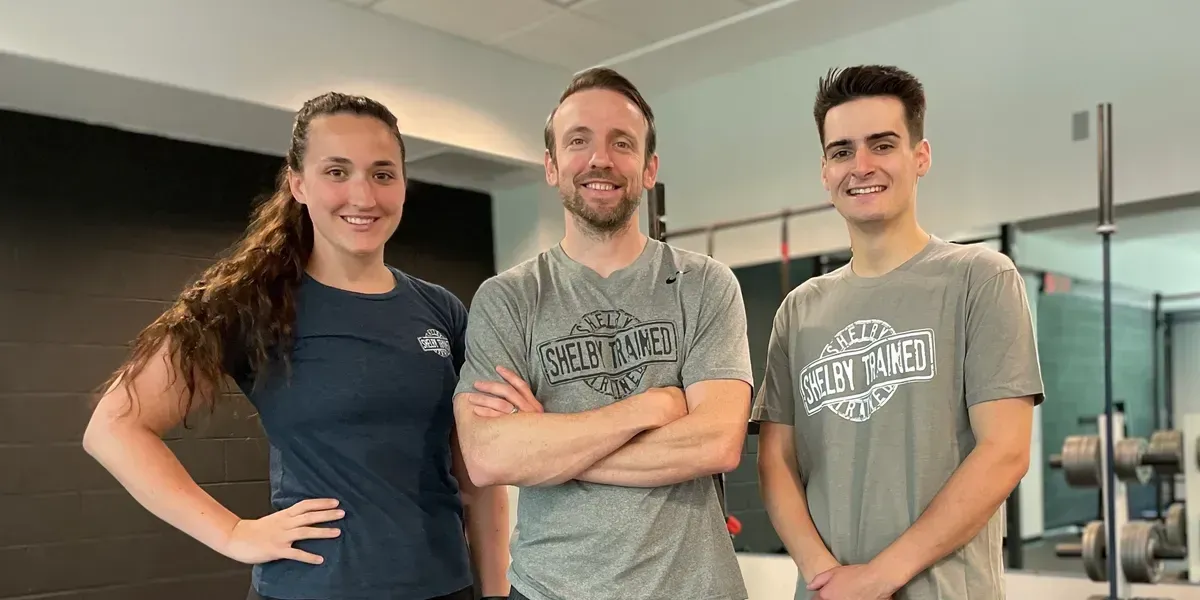
Our Team believes in providing a personalized approach to ensure your results. We are purposeful in everything from the workouts, to the coaching, to the fun/safe environment.
Learn why people seek us out to help them change their lives!
ARTICLES
July 23, 2021
Not Popular, But It's Science
July 1, 2021
How to train around injuries

July 1, 2021
Speed - what it really is

April 28, 2021
The X factor
Copyright © 2023 Shelby Trained - All Rights Reserved.