Training Facility and Gym: 2 DeLorme Drive, Yarmouth, Maine 04097 | 207-212-8371

PROVIDING SIMPLE, EFFECTIVE, AND PERSONALIZED SOLUTIONS
ARTICLES
The Anti-Movement Core
Performance, Stability & Long-Term Health
Why You Should Never Train Your Core This One Way
I remember back in the mid-2000s when I first started reading research that challenged everything most of us were taught about core training.
For decades, “core work” meant one thing:
Crunches.
Sit-ups.
Endless spinal flexion.
Bend forward enough times and—supposedly—you’d build a strong core and sculpted abs.
Then researchers like Dr. Stuart McGill changed the conversation.
And once you understand this shift, you can’t unsee it.
The Big Shift in Core Training
Here’s the key idea that changed everything:
The core isn’t designed to create movement.
It’s designed to resist it.
Think about what your body actually needs to do in sport—and in life:
Stay stable while cutting and changing direction
Absorb force during landings or contact
Transfer power from the legs to the arms
Protect the spine under load and unpredictable situations
None of that looks like repeated spinal bending.
Why Crunches Miss the Mark
Research has shown that repeated spinal flexion—doing crunches and sit-ups over and over—does not build a more functional core.
In fact, excessive bending and rounding of the spine can:
Increase stress on spinal discs and ligaments
Contribute to low-back irritation over time
Fail to prepare the body for real-world demands
You might feel a burn—but that doesn’t mean you’re building something useful.
What Functional Core Training Actually Looks Like
Instead of chasing movement, athletes should train the core to control movement.
That means focusing on exercises that teach your torso to stay strong while the rest of your body moves.
Effective core training emphasizes:
Anti-extension (resisting arching)
Anti-rotation (resisting twisting)
Anti-lateral flexion (resisting side bending)
This style of training builds:
💪 Stability during explosive movements
⚡ Better force transfer between lower and upper body
🏃♂️ Cleaner acceleration, cutting, and balance
🛡 Reduced injury risk under load and fatigue
What We See When Athletes Train This Way
When athletes shift away from endless flexion work and toward anti-movement core training, the changes are obvious:
Better balance under contact
Sharper starts and first steps
Stronger, more controlled landings
Faster recovery between explosive actions
More confidence sprinting, jumping, and cutting
And this shows up across sports—not just in the weight room.
The Real Purpose of Core Training
The core isn’t about crunches.
It’s not about chasing a look.
And it’s definitely not about how sore your abs feel.
It’s about:
Performance
Durability
Long-term health
Your core is the foundation that allows everything else to work.
Final Thought
If your core training still revolves around bending forward over and over, it’s time to rethink it.
Build a core that resists motion, controls force, and protects your spine—and you’ll move better, faster, and with more confidence.
Train smart.
Train strong.
Train functional.
— Coach Shelby and The Shelby Trained Team

Health & Wellness - differently!

The Simplementation System is a health & wellness-based system that is built upon successfully implement evidence-based actions into people's busy lives.
What are your specific fitness goals?
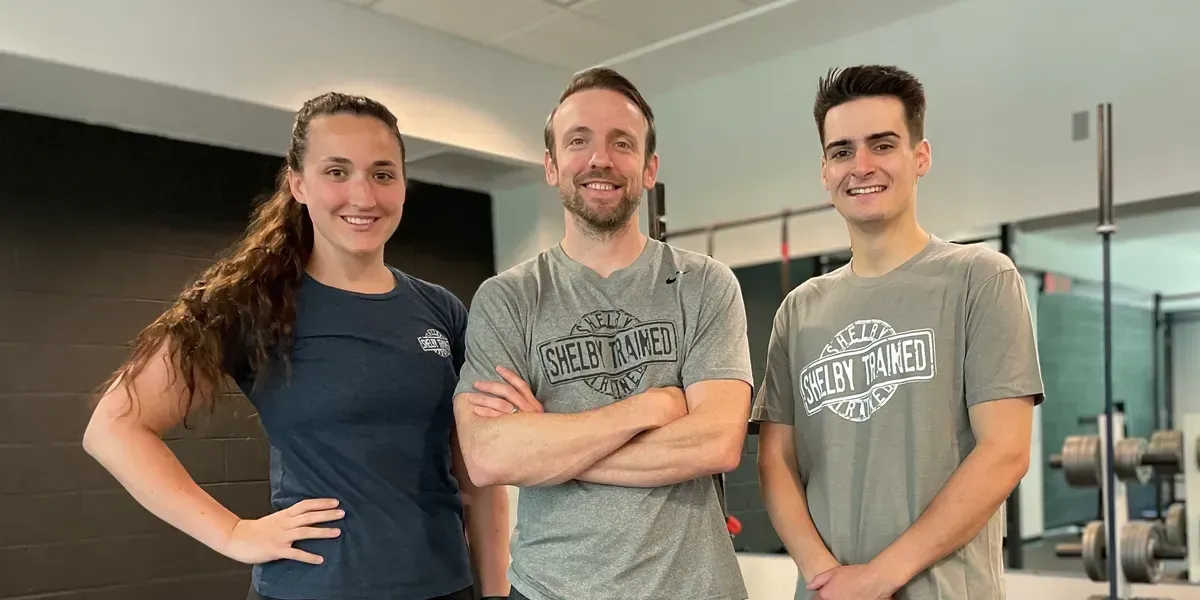
Our Team believes in providing a personalized approach to ensure your results. We are purposeful in everything from the workouts, to the coaching, to the fun/safe environment.
Learn why people seek us out to help them change their lives!
ARTICLES

July 23, 2021
Not Popular, But It's Science
July 1, 2021
How to train around injuries
July 1, 2021
Speed - what it really is

April 28, 2021
The X factor
Copyright © 2023 Shelby Trained - All Rights Reserved.