Training Facility and Gym: 2 DeLorme Drive, Yarmouth, Maine 04097 | 207-212-8371

PROVIDING SIMPLE, EFFECTIVE, AND PERSONALIZED SOLUTIONS
ARTICLES
The Overhead Truth
Strength, Stability & Real-World Movement
“Overhead movement isn’t dangerous—being unprepared for it is.”
Is Overhead Lifting Actually the Problem?
If you’ve ever dealt with shoulder pain, back discomfort, or an old injury, you’ve probably heard this:
“You shouldn’t lift overhead.”
It sounds safe.
It sounds protective.
But here’s the truth:
The issue usually isn’t the movement.
It’s how the movement is performed—and whether your body is prepared for it.
Your Body Was Built to Go Overhead
Think about your daily life.
You reach overhead to:
Put dishes away
Grab something off a shelf
Put on a shirt
Lift a child
Overhead movement isn’t optional.
It’s part of normal human function.
Avoiding it entirely doesn’t make you safer.
In many cases, it makes you less prepared for real-world demands.
Research on shoulder health consistently shows that properly programmed overhead training can improve:
✅ Stability
✅ Joint mechanics
✅ Long-term resilience
The goal isn’t to eliminate the movement.
It’s to perform it well.
It’s Not If—It’s How
The real question isn’t whether you should go overhead.
It’s how you do it.
A few key principles make all the difference:
Use a load you can control
If you can’t maintain posture, keep your ribs down, and control your shoulders—the weight is too heavy.Avoid fixed paths when possible
Barbells and machines can lock you into positions your body may not tolerate well. Dumbbells, cables, and bands allow more natural movement.Use a shoulder-friendly angle
Press slightly in front of your body (scapular plane) instead of flaring your arms straight out.Respect your range of motion
More range isn’t better if it leads to compensation through your lower back, ribs, or shoulders.
Build the System That Supports It
Healthy overhead movement doesn’t come from the shoulders alone.
It requires support from the entire system.
You need:
Thoracic (upper back) mobility for proper positioning
Core stability to prevent excessive arching
Scapular control to guide and stabilize the shoulder
When these pieces work together, overhead training becomes both safer and more effective.
Final Thought
The goal isn’t to avoid movement.
It’s to earn it.
When you build the strength, control, and mobility to support overhead positions:
You reduce risk
You improve function
You move with more confidence
You stay capable longer
Your shoulders were built to move.
Train them in a way that keeps them that way.
— Coach Shelby & The Shelby Trained Team

Health & Wellness - differently!

The Simplementation System is a health & wellness-based system that is built upon successfully implement evidence-based actions into people's busy lives.
What are your specific fitness goals?
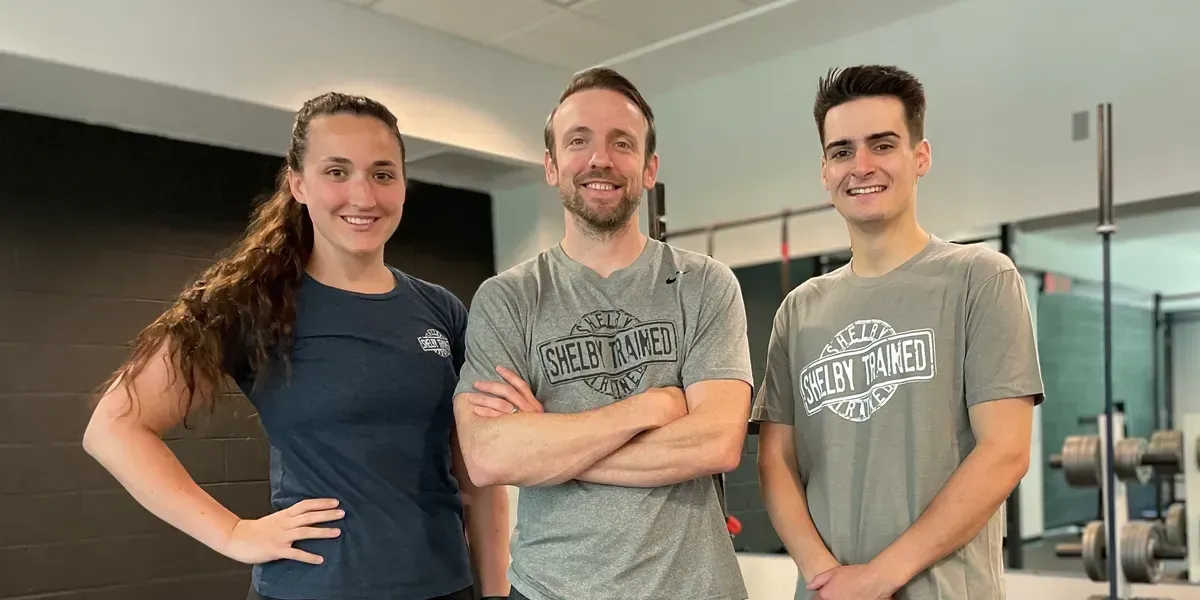
Our Team believes in providing a personalized approach to ensure your results. We are purposeful in everything from the workouts, to the coaching, to the fun/safe environment.
Learn why people seek us out to help them change their lives!
ARTICLES

July 23, 2021
Not Popular, But It's Science
July 1, 2021
How to train around injuries

July 1, 2021
Speed - what it really is

April 28, 2021
The X factor
Copyright © 2023 Shelby Trained - All Rights Reserved.