Training Facility and Gym: 2 DeLorme Drive, Yarmouth, Maine 04097 | 207-212-8371

PROVIDING SIMPLE, EFFECTIVE, AND PERSONALIZED SOLUTIONS
ARTICLES
Why Some Athletes Always Seem One Step Ahead
Speed, Balance & Game-Changing Athleticism
“The best reactive athletes aren't always faster — they just waste less time deciding.”
The Difference Between Fast and Reactive
You can usually identify reactive athletes pretty quickly.
Not because they're the fastest athletes on the field.
Because they rarely look late.
The game speeds up.
Everything becomes chaotic.
And somehow they still look calm and under control.
We were watching athletes work through reaction drills recently, and the separation became obvious almost immediately.
Some athletes looked fast once they decided what to do.
Others reacted instantly.
That's a completely different skill.
Why Reaction Speed Is More Than Speed
Research on reactive performance continues to support something coaches have observed for years:
Elite reactive athletes aren't just physically faster.
They recognize movement earlier.
They process information more efficiently.
They organize their body faster.
They spend less time hesitating.
And those small differences add up quickly in sport.
Because every fraction of a second matters.
The Brain and Body Must Work Together
This is why reaction training isn't simply about creating random chaos.
And it isn't about flashy drills designed for social media.
The goal is much more specific.
We're trying to improve how efficiently the brain and body communicate under pressure.
Can an athlete recognize information quickly?
Can they make a decision quickly?
Can they physically organize themselves once that decision is made?
Those three pieces determine reaction ability.
Not just raw speed.
The Problem With Predictable Training
A lot of athletes train speed in highly predictable environments.
Planned starts.
Planned cuts.
Planned movement patterns.
And those things have value.
But sport rarely works that way.
In competition, athletes don't know exactly what's coming next.
That's where reaction becomes different.
Uncertainty changes everything.
Where Athletes Actually Slow Down
This is why you'll often see athletes who look explosive during planned drills suddenly appear slower once decision-making is introduced.
Extra steps.
Late reactions.
Poor positioning.
Hesitation.
Not because they became physically slower.
Because the processing system broke down.
The body couldn't organize quickly enough once information arrived.
And that delay shows up as lost speed.
The Hidden Advantage of Good Movers
The athletes who react best usually share a common characteristic:
They move well under pressure.
When something unexpected happens, they don't panic mechanically.
They reorganize quickly.
They stay balanced.
They maintain position.
Their movement quality holds up even when the situation becomes unpredictable.
And that's a massive advantage.
Reaction Speed Is a Full-System Skill
Reaction speed isn't just about your eyes.
It's not just about your brain.
And it's not just about your legs.
It's about how efficiently all three work together.
Can you recognize information?
Can you make a decision?
Can your body execute that decision immediately?
That's where the real separation happens.
Because once the decision is made, the athlete who can organize their body fastest usually wins the race.
Not the athlete who simply moves fastest.
Train for the Real Game
If you want to become more reactive, don't just train speed.
Train decision-making.
Train movement quality.
Train your ability to stay organized when the answer isn't obvious.
Because sport isn't predictable.
And the athletes who thrive aren't always the fastest.
They're the ones who can process, organize, and respond before everyone else.
— Coach Shelby & The Shelby Trained Team

Health & Wellness - differently!

The Simplementation System is a health & wellness-based system that is built upon successfully implement evidence-based actions into people's busy lives.
What are your specific fitness goals?
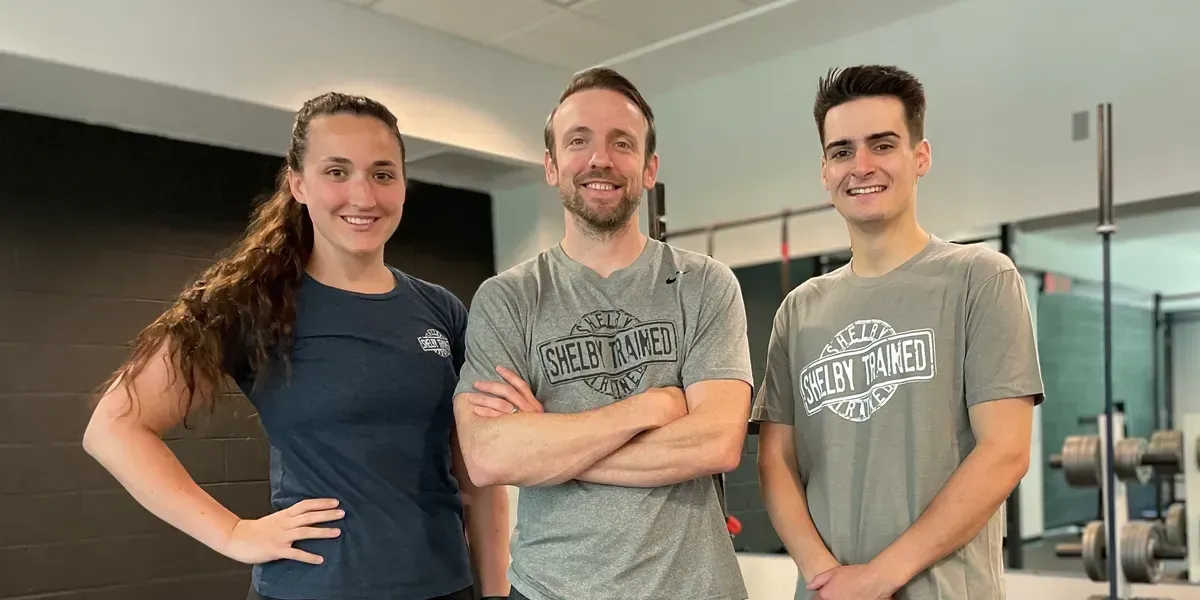
Our Team believes in providing a personalized approach to ensure your results. We are purposeful in everything from the workouts, to the coaching, to the fun/safe environment.
Learn why people seek us out to help them change their lives!
ARTICLES

July 23, 2021
Not Popular, But It's Science

July 1, 2021
How to train around injuries
July 1, 2021
Speed - what it really is

April 28, 2021
The X factor
Copyright © 2023 Shelby Trained - All Rights Reserved.