Training Facility and Gym: 2 DeLorme Drive, Yarmouth, Maine 04097 | 207-212-8371

PROVIDING SIMPLE, EFFECTIVE, AND PERSONALIZED SOLUTIONS
ARTICLES
Why This Doesn't Show Up in Your Sport
"Athletic performance isn't just about how high you jump or how fast you move. It's about how well you can control what happens next."
I was watching an athlete go through a reaction drill the other day.
Nothing complicated.
Just reacting, moving, and changing direction.
But every time they had to land and reset, the same thing happened.
It took an extra second to find their balance.
At first, it didn't seem like a big deal.
But in sport, that's everything.
They weren't slow.
They weren't weak.
They simply couldn't control the landing.
And that's often where performance breaks down.
Not during the jump.
Not during the sprint.
But in the transition between movements.
What Happens After You Leave the Ground?
Many athletes spend a lot of time focusing on explosive qualities.
Jump higher.
Move faster.
Become more powerful.
Those are important goals.
But what happens after you leave the ground may be just as important as what happens before it.
Can you absorb force efficiently?
Can you stabilize when you land?
Can you quickly organize your body and prepare for the next movement?
Those skills often separate good athletes from great ones.
Because sport rarely rewards a single movement.
It rewards the ability to link movements together.
A Simple Test That Reveals a Lot
One drill we use to evaluate and develop these qualities is the Double Leg Shark Skill Test.
Watch the Exercise:
On the surface, it looks simple.
Jump.
Land.
Reset.
Repeat.
But underneath that simplicity, the drill exposes something many athletes don't train enough.
Control.
What the Test Shows
The Double Leg Shark Skill Test helps answer several important questions:
✅ Can you land and remain stable?
✅ Can you control your body position without excessive movement?
✅ Can you reset quickly and efficiently?
✅ Can you absorb force without needing extra steps to recover?
These qualities show up constantly in competition.
When rebounding.
When changing direction.
When reacting to an opponent.
When absorbing contact.
When preparing for the next play.
If the landing isn't controlled, everything that follows becomes less efficient.
Where Performance Gets Lost
Many athletes focus on how high they can jump.
Others focus on how fast they can sprint.
But they don't spend enough time thinking about how they come back down.
That's often the missing piece.
If you can't control the landing, you're constantly trying to recover.
Every extra step costs time.
Every loss of position requires another correction.
Every correction slows down the next movement.
In fast-paced sports, those small delays add up quickly.
The athlete who can stabilize and move immediately often gains the advantage.
Control Is What Transfers
That's also one reason proper landing mechanics are so important for long-term athletic development.
The ability to absorb force and maintain alignment helps the body manage the demands of sport more effectively.
Better control often leads to better movement.
Better movement often leads to better performance.
That's why the goal isn't simply to jump higher.
The goal is to own the landing.
Because that's where athleticism becomes usable.
Don't Just Train the Jump
If you want training to carry over to competition, pay attention to more than the explosive part of the movement.
Pay attention to the transition.
The reset.
The landing.
The ability to quickly regain control and prepare for what's next.
That's what shows up in sport.
Not just the jump.
The landing.
That's where control lives.
— Coach Shelby & The Shelby Trained Team

Health & Wellness - differently!

The Simplementation System is a health & wellness-based system that is built upon successfully implement evidence-based actions into people's busy lives.
What are your specific fitness goals?
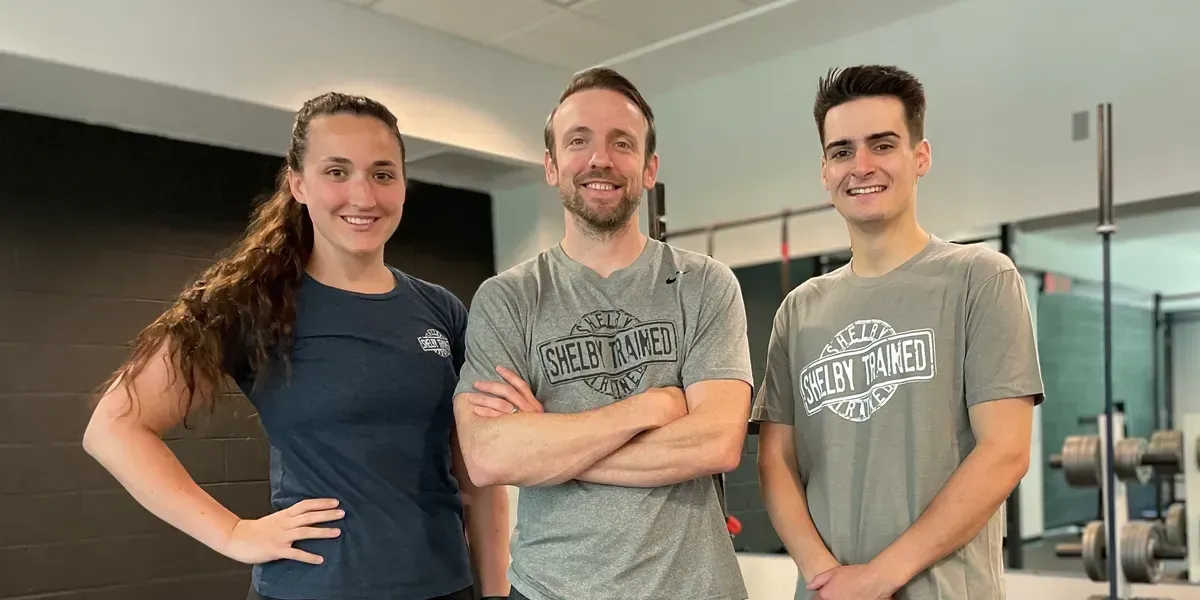
Our Team believes in providing a personalized approach to ensure your results. We are purposeful in everything from the workouts, to the coaching, to the fun/safe environment.
Learn why people seek us out to help them change their lives!
ARTICLES

July 23, 2021
Not Popular, But It's Science
July 1, 2021
How to train around injuries
July 1, 2021
Speed - what it really is

April 28, 2021
The X factor
Copyright © 2023 Shelby Trained - All Rights Reserved.