Training Facility and Gym: 2 DeLorme Drive, Yarmouth, Maine 04097 | 207-212-8371

PROVIDING SIMPLE, EFFECTIVE, AND PERSONALIZED SOLUTIONS
ARTICLES
Your Ankles Might Be Changing the Way You Squat
"Sometimes the reason a squat feels awkward isn't your squat. It's the ankle underneath it."
I want you to try something.
Stand a few inches away from a wall.
Keep your heel on the ground and slowly drive your knee forward toward the wall.
Can you touch the wall without your heel lifting?
Now try the other side.
Sometimes there's a noticeable difference.
And that difference matters more than most people realize.
Because your ankles play a major role in how you move.
Not just when you squat, but when you walk downstairs, step off a curb, climb stairs, or get into lower positions throughout the day.
Your Body Will Find a Way
When your ankle has enough motion, movement tends to happen smoothly.
When it doesn't, your body rarely stops the movement altogether.
Instead, it finds another way.
Maybe your heel comes off the ground.
Maybe your foot turns outward.
Maybe your knees shift differently.
Maybe your hips or lower back take on extra work.
The task still gets completed.
But the strategy changes.
That's why people can perform the same exercise and look completely different doing it.
The body is always trying to solve the movement problem in front of it.
Why Ankle Mobility Matters
Adequate ankle mobility helps you access positions that many daily activities require.
Think about:
Squatting down to pick something up
Walking downstairs
Getting out of a low chair
Stepping over obstacles
Lunging or changing levels during exercise
If the ankle can't move well enough to support these actions, compensations often appear elsewhere.
Over time, those compensations can make movement feel less efficient and less comfortable.
That's why ankle mobility isn't just about the ankle.
It's about how the entire body moves.
Mobility and Strength Work Together
One misconception about mobility training is that it has to be completely separate from strength training.
In reality, the two often work together.
A controlled split squat that allows the knee to travel forward can challenge ankle mobility while simultaneously building strength.
A well-executed squat can accomplish the same thing.
The body isn't simply learning to access a position.
It's learning to control that position under load.
That's an important difference.
Because mobility without strength is often difficult to use.
Don't Just Chase More Range
When people feel stiff, the first instinct is often to stretch more.
And stretching can certainly help.
But gaining range of motion is only part of the equation.
The bigger question is:
Can you use that range effectively?
Can you stay balanced there?
Can you produce force there?
Can you maintain control there?
Those qualities are what turn mobility into something functional.
Build Mobility You Can Use
If your ankles feel stiff, don't spend all your time trying to stretch them into submission.
Work on the range.
Then strengthen the range.
Load the range.
Control the range.
Use movements such as:
Split squats
Controlled squats
Step-downs
Lunges
Calf raises through a full range of motion
These exercises help bridge the gap between mobility and performance.
Because the goal isn't to have flexible ankles.
The goal is to have ankles that allow you to move confidently and efficiently.
That's when mobility becomes something you can actually use.
And that's when it starts carrying over to the things that matter outside the gym.
— Coach Shelby & The Shelby Trained Team

Health & Wellness - differently!

The Simplementation System is a health & wellness-based system that is built upon successfully implement evidence-based actions into people's busy lives.
What are your specific fitness goals?
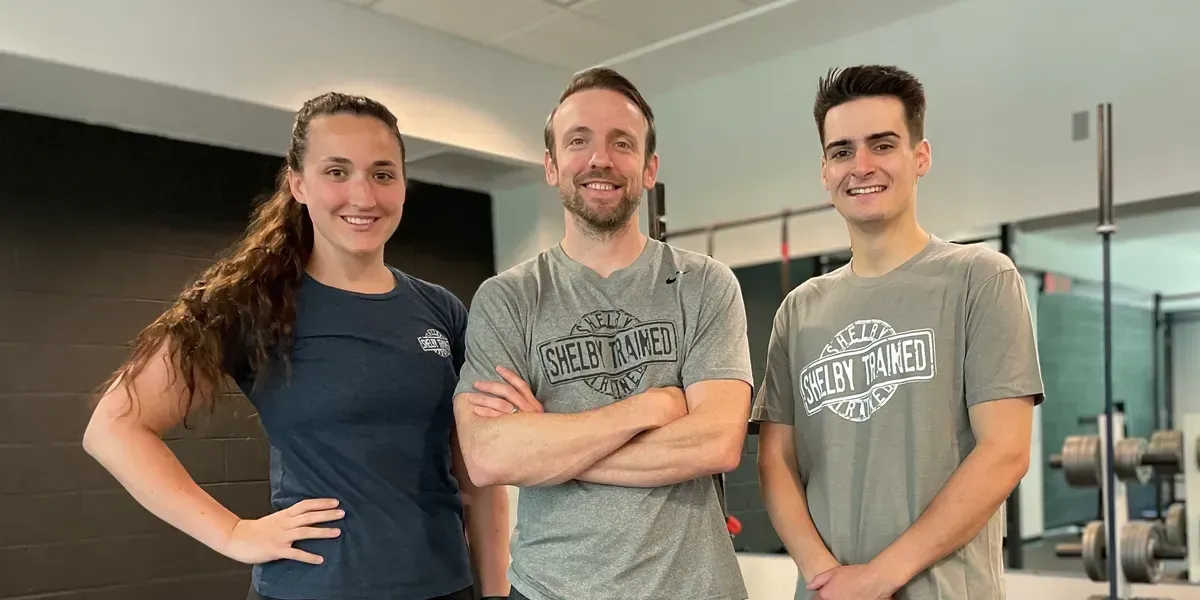
Our Team believes in providing a personalized approach to ensure your results. We are purposeful in everything from the workouts, to the coaching, to the fun/safe environment.
Learn why people seek us out to help them change their lives!
ARTICLES

July 23, 2021
Not Popular, But It's Science
July 1, 2021
How to train around injuries

July 1, 2021
Speed - what it really is

April 28, 2021
The X factor
Copyright © 2023 Shelby Trained - All Rights Reserved.