Training Facility and Gym: 2 DeLorme Drive, Yarmouth, Maine 04097 | 207-212-8371

PROVIDING SIMPLE, EFFECTIVE, AND PERSONALIZED SOLUTIONS
ARTICLES
Stop Comparing Today's Workout to Yesterday's
"Progress is easier to see when you stop looking at individual workouts and start looking at trends."
One of the easiest ways to convince yourself you're not making progress is to evaluate your performance one day at a time.
Monday feels great.
Wednesday feels terrible.
Friday is somewhere in between.
And suddenly you're wondering whether the program is working.
The problem is that performance has noise.
Sleep changes.
Stress changes.
Nutrition changes.
Training fatigue changes.
Life changes.
All of these variables can influence how a workout feels on any given day.
That's why I'm usually much more interested in what happens when we zoom out.
A Single Workout Doesn't Tell the Whole Story
Let's say you're tracking a basic strength exercise over the course of eight weeks.
In week one, you perform eight reps with a certain weight.
You complete the set, but the last few reps are slow and difficult.
Your technique starts to fade.
You finish feeling completely spent.
Four weeks later, you're using the exact same weight.
Still eight reps.
On paper, it looks like nothing changed.
But look a little closer.
The reps are smoother.
Your position is better.
The movement is more controlled.
And when you finish the set, you know you could have done another two or three reps if needed.
That's progress.
Even though the number on the bar stayed the same.
Don't Let Daily Fluctuations Fool You
Athletes and adults alike often expect progress to be perfectly linear.
A better workout every day.
A new personal best every week.
A constant upward trend.
That's not how real training works.
Some days you'll feel strong.
Some days you'll feel sluggish.
Some days you'll perform better than expected.
Other days you'll feel like you've gone backwards.
Those fluctuations are normal.
They don't automatically mean the program is working or failing.
They simply reflect the reality that human performance changes from day to day.
Track More Than the Weight
That's one reason I like tracking more than just the obvious number.
Yes, record the weight.
But also pay attention to:
How many reps you completed
How difficult the set felt
How well you controlled the movement
How much rest you needed afterward
How confident you felt performing the exercise
These details provide context.
And context helps tell the real story of progress.
Because performance isn't just about what you did.
It's about how you did it.
Capacity Matters
The goal of training isn't to prove you're improving every Monday.
The goal is to gradually increase your capacity over time.
Can you handle the workload more efficiently?
Can you maintain better technique?
Can you recover faster?
Can you perform the same work with less effort?
These changes are often the earliest signs that adaptation is taking place.
And over time, they usually lead to bigger improvements.
Progress Has More Than One Form
Sometimes progress shows up as more weight on the bar.
Sometimes it shows up as more repetitions.
Sometimes it shows up as moving better.
Sometimes it shows up as the same work requiring less effort.
All of those count.
All of those matter.
And all of them indicate that your body is becoming more capable.
So don't make the mistake of comparing today's workout only to yesterday's.
Compare today's abilities to where you were a month ago.
Or two months ago.
Or six months ago.
That's where the real story usually lives.
And when you look at it that way, you may realize you're making more progress than you thought.
— Coach Shelby & The Shelby Trained Team

Health & Wellness - differently!
The Simplementation System is a health & wellness-based system that is built upon successfully implement evidence-based actions into people's busy lives.
What are your specific fitness goals?
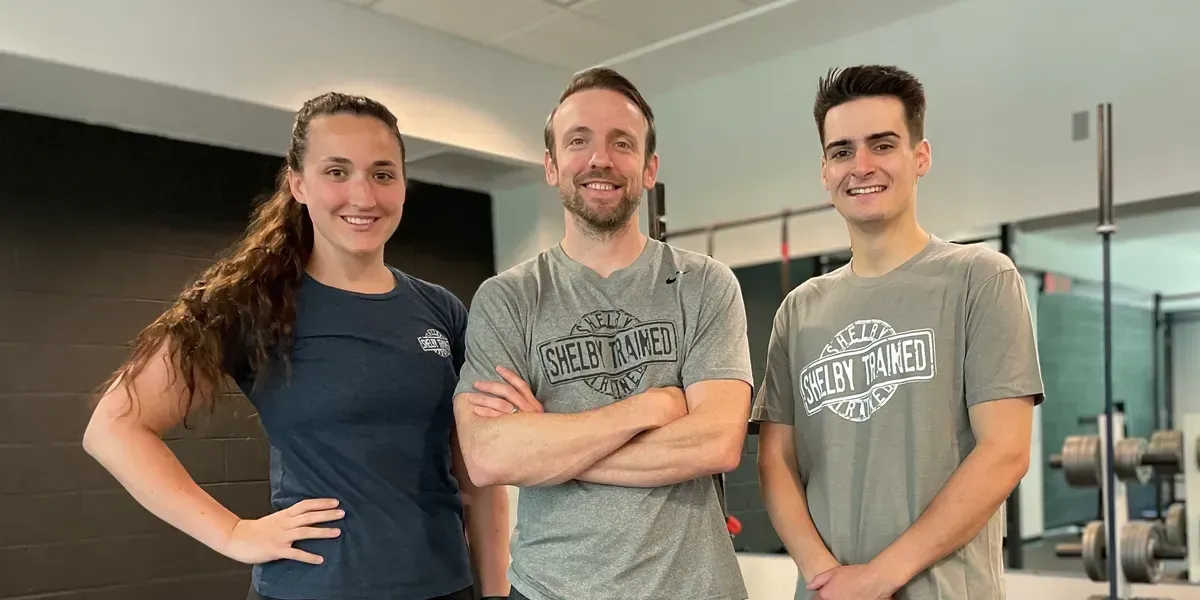
Our Team believes in providing a personalized approach to ensure your results. We are purposeful in everything from the workouts, to the coaching, to the fun/safe environment.
Learn why people seek us out to help them change their lives!
ARTICLES
July 23, 2021
Not Popular, But It's Science
July 1, 2021
How to train around injuries

July 1, 2021
Speed - what it really is

April 28, 2021
The X factor
Copyright © 2023 Shelby Trained - All Rights Reserved.