Training Facility and Gym: 2 DeLorme Drive, Yarmouth, Maine 04097 | 207-212-8371

PROVIDING SIMPLE, EFFECTIVE, AND PERSONALIZED SOLUTIONS
ARTICLES
There's a Number We Don't Track Enough
"The weight on the bar tells part of the story. How the weight feels tells another."
Everyone likes tracking results.
How much did you lift?
How fast did you run?
How many reps did you complete?
Those numbers are important.
They're objective.
They're easy to compare.
And they're satisfying when they improve.
But there's another number I think athletes and adults should pay much more attention to:
How hard did it feel?
The Value of Effort Tracking
In exercise science, this is often called RPE, or Rating of Perceived Exertion.
It's a simple concept.
After a set, workout, or training session, you give the effort a rating.
Typically on a scale from 1 to 10.
For example:
3/10: Easy effort, plenty left in the tank
5/10: Moderate effort, comfortable work
7/10: Challenging but manageable
9/10: Very difficult, close to your limit
10/10: Maximum effort
At first glance, this might seem too subjective to be useful.
But that's exactly why it's valuable.
Your perception often reveals changes that don't immediately show up elsewhere.
Progress Doesn't Always Change the Numbers
Imagine you've been performing step-ups with the same pair of dumbbells for a month.
Week one:
Same weight
Same reps
Effort feels like an 8 out of 10
Four weeks later:
Same weight
Same reps
Same exercise
But now it feels like a 6 out of 10
If you only looked at your workout log, it would appear that nothing changed.
But something clearly did.
Your body became more capable.
You developed the ability to handle the same workload with less effort.
That's real progress.
Even if the numbers on paper stayed exactly the same.
Capacity Matters
One of the biggest mistakes people make in training is assuming progress only happens when something gets added.
More weight.
More reps.
More sets.
More volume.
More intensity.
Those are certainly ways to progress.
But they're not the only ways.
Sometimes the most meaningful adaptation is that a familiar task becomes easier.
You recover faster.
You move more efficiently.
You finish the workout with more energy.
The challenge hasn't changed.
Your capacity has.
And that's worth paying attention to.
Why RPE Is So Useful
Tracking perceived effort helps reveal trends that traditional workout metrics can miss.
It can show:
✅ Improved fitness
✅ Improved strength endurance
✅ Better recovery
✅ Increased confidence
✅ Reduced fatigue at a given workload
✅ Growing work capacity
These improvements often appear before dramatic changes in performance numbers.
That's why coaches frequently track both objective and subjective measures.
Together, they tell a more complete story.
Add One More Number
The next time you log a workout, write down:
The exercise
The weight used
The reps completed
Then add one more metric:
"How hard was that?"
Don't overthink it.
Just give it an honest rating.
Then revisit those ratings a few weeks later.
You may notice that the same workout no longer feels as demanding.
The spreadsheet may look nearly identical.
But your body won't be.
Progress Is More Than What You Lift
Getting stronger isn't always about adding another plate to the bar.
Sometimes it's about making today's workload feel easier than it did a month ago.
Sometimes it's about recovering faster.
Sometimes it's about maintaining better technique under fatigue.
Sometimes it's about finishing a session and knowing you had more available.
All of those are signs of improvement.
So keep tracking the obvious numbers.
But don't ignore the subjective ones.
Because the question:
"How hard did that feel?"
might tell you more about your progress than you realize.
— Coach Shelby & The Shelby Trained Team

Health & Wellness - differently!

The Simplementation System is a health & wellness-based system that is built upon successfully implement evidence-based actions into people's busy lives.
What are your specific fitness goals?
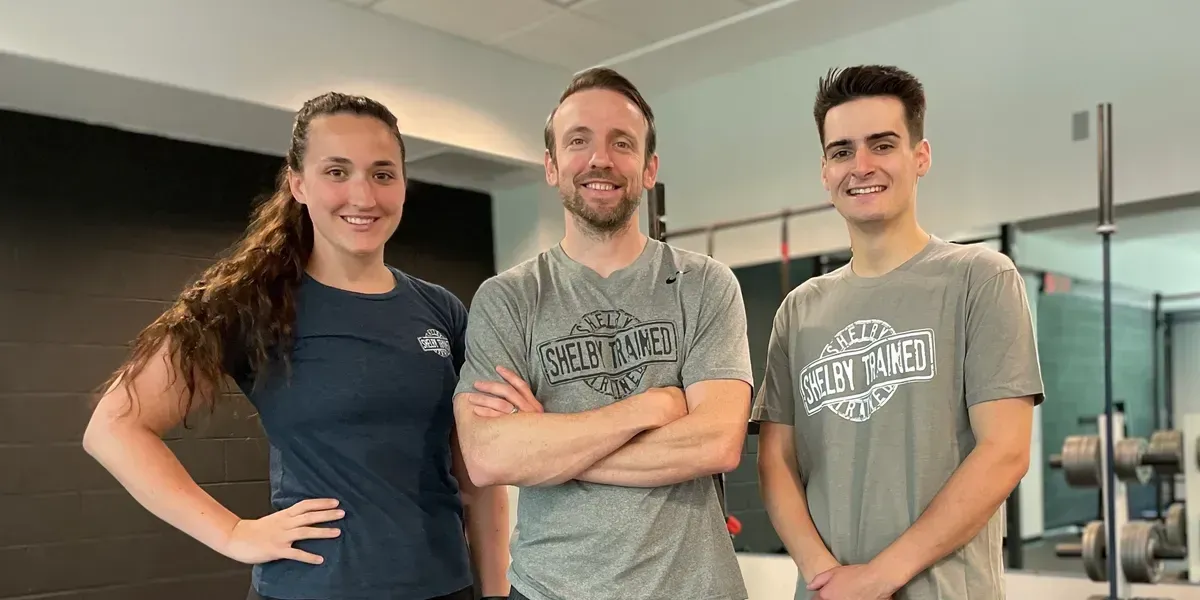
Our Team believes in providing a personalized approach to ensure your results. We are purposeful in everything from the workouts, to the coaching, to the fun/safe environment.
Learn why people seek us out to help them change their lives!
ARTICLES

July 23, 2021
Not Popular, But It's Science
July 1, 2021
How to train around injuries

July 1, 2021
Speed - what it really is

April 28, 2021
The X factor
Copyright © 2023 Shelby Trained - All Rights Reserved.