Training Facility and Gym: 2 DeLorme Drive, Yarmouth, Maine 04097 | 207-212-8371

PROVIDING SIMPLE, EFFECTIVE, AND PERSONALIZED SOLUTIONS
ARTICLES
Why Tightness Isn't Always a Mobility Problem
Recovery, Longevity & Athletic Health
“Your body doesn't avoid positions because it hates movement. It avoids positions it no longer trusts.”
What Most People Get Wrong About Tightness
One thing I've noticed over the years working with adults:
A lot of people who feel "tight" aren't actually missing movement.
They're avoiding movement.
Not intentionally.
Not consciously.
Their body has simply stopped trusting certain positions.
And when that happens, movement begins to change.
The Small Adjustments You Don't Notice
It usually starts subtly.
You stop rotating through your torso when you walk and begin turning your entire body instead.
You avoid getting low through your hips and start bending more through your back.
Your stride becomes shorter without you realizing it.
You stop reaching as far overhead.
You move around positions instead of through them.
At first, these adjustments don't seem significant.
But the body is paying attention.
And over time, it starts organizing itself around what it no longer feels comfortable doing.
How Movement Quality Slowly Disappears
This is where movement quality begins to fade.
Not because flexibility suddenly vanished.
Not because muscles became permanently tight.
But because the body gradually stops using certain positions.
And the less those positions are used, the less familiar they become.
The less familiar they become, the less confident the body feels in them.
It's a cycle.
And it happens more often than most people realize.
Why Stretching Doesn't Always Fix It
What's interesting is that many people respond by trying to force more range.
More stretching.
More mobility routines.
More aggressive flexibility work.
But if your body doesn't feel stable or strong in a position, it often won't keep the change.
You might gain temporary range.
You might feel looser for a little while.
But the body usually returns to what it trusts.
Because trust—not flexibility—is often the limiting factor.
Movement Has to Be Trained
This is why movement isn't just something you access.
It's something you train.
I was working with someone recently who struggled to bend down and pick something up without feeling stiff afterward.
The issue wasn't strength.
The issue wasn't flexibility.
Their body had simply stopped trusting that position.
So we rebuilt it.
Slowly.
Controlling the range.
Adding load gradually.
Teaching the body that the position was safe and manageable.
And over time, things changed.
What Real Mobility Looks Like
The improvement wasn't dramatic overnight.
But it was meaningful.
Normal movements started requiring less effort.
Stiffness decreased.
Confidence increased.
The body stopped treating the position like a threat.
And that's what real mobility often looks like.
Not forcing yourself into a position once.
Not chasing flexibility for the sake of flexibility.
But building enough control and confidence that your body naturally chooses to use that position again.
Trust Creates Freedom
The biggest mobility breakthroughs often happen when people stop asking:
"How do I get more range?"
And start asking:
"How do I make this position feel safer and stronger?"
Because your body is always making decisions about movement.
And when it trusts a position, it gives you access to it.
When it doesn't, it protects you from it.
That's not dysfunction.
That's survival.
The goal is simply to give your body a reason to trust the movement again.
And when that happens, mobility tends to follow.
— Coach Shelby & The Shelby Trained Team

Health & Wellness - differently!

The Simplementation System is a health & wellness-based system that is built upon successfully implement evidence-based actions into people's busy lives.
What are your specific fitness goals?
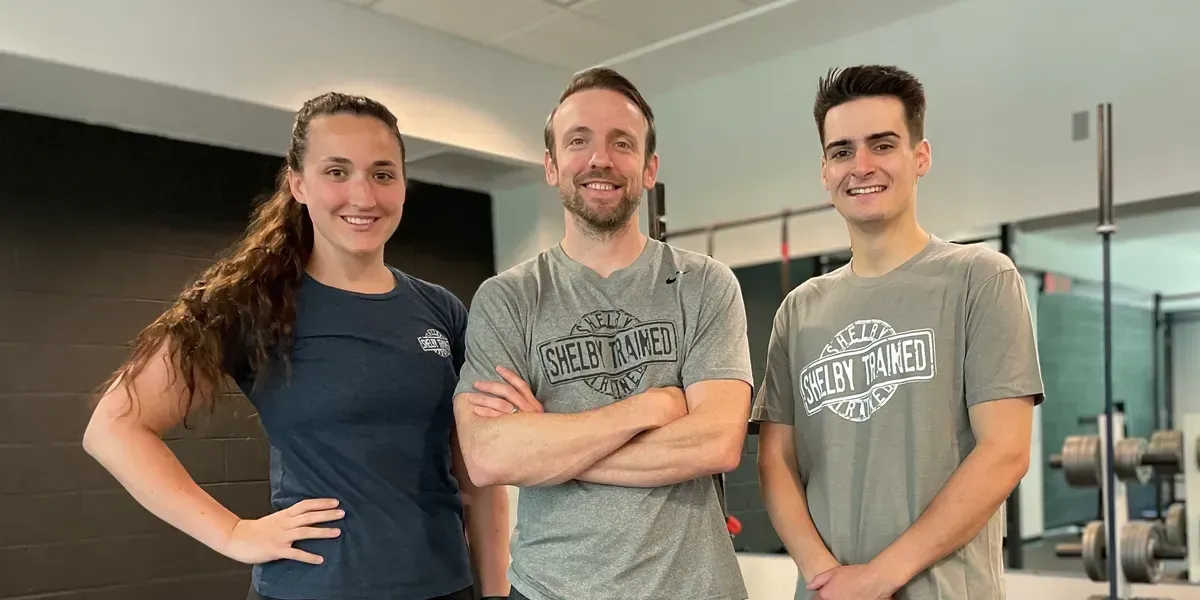
Our Team believes in providing a personalized approach to ensure your results. We are purposeful in everything from the workouts, to the coaching, to the fun/safe environment.
Learn why people seek us out to help them change their lives!
ARTICLES

July 23, 2021
Not Popular, But It's Science
July 1, 2021
How to train around injuries

July 1, 2021
Speed - what it really is

April 28, 2021
The X factor
Copyright © 2023 Shelby Trained - All Rights Reserved.