Training Facility and Gym: 2 DeLorme Drive, Yarmouth, Maine 04097 | 207-212-8371

PROVIDING SIMPLE, EFFECTIVE, AND PERSONALIZED SOLUTIONS
ARTICLES
Your Journal Might Be More Valuable Than You Think
"The best athletes don't just collect performance data. They collect information that helps them understand how their body is responding to training."
When athletes think about tracking progress, they usually think about numbers.
How much weight they lifted.
How fast they sprinted.
How high they jumped.
Those metrics matter.
They're measurable, objective, and easy to compare over time.
But they're only part of the picture.
Some of the most valuable information an athlete can collect never appears on a testing sheet.
It's found in the small details that influence performance every day.
What the Numbers Don't Tell You
An athlete might hit the same sprint time two weeks in a row.
On paper, nothing changed.
But what if one sprint felt effortless and the other felt like a struggle?
That's useful information.
It tells us something about how the body is responding to training.
Energy levels.
Sleep quality.
Recovery.
Stress.
Muscle soreness.
These factors can have a significant impact on performance, even when the numbers look identical.
That's why performance isn't just about what happened.
It's also about how it happened.
Pay Attention to the Small Signals
One of the habits I encourage athletes to build is spending just a couple of minutes after practice writing down a few simple observations.
Questions like:
How was your energy today?
How well did you sleep last night?
How difficult did training feel?
Is anything unusually sore or tight?
That's it.
Nothing complicated.
No lengthy reports.
Just a few quick notes.
Over time, those observations begin to tell a story.
Patterns Reveal Progress
The value of a journal isn't found in a single entry.
It's found in the patterns that emerge over weeks and months.
You start to notice what your best training weeks have in common.
Maybe your performance improves when you're consistently getting enough sleep.
Maybe certain soreness patterns appear before performance drops.
Maybe stressful weeks affect your energy more than you realized.
Those patterns help athletes make better decisions.
Instead of waiting for performance to decline, they can recognize the warning signs early and adjust accordingly.
Better Awareness Leads to Better Results
The most successful athletes don't just train hard.
They pay attention.
They understand that performance is influenced by more than a stopwatch, a barbell, or a vertical jump measurement.
They recognize that awareness is a skill.
And like every other skill, it can be developed.
A simple journal can improve that awareness.
It can help athletes learn how their body responds to training, recovery, stress, and competition.
And those insights often lead to better decisions both on and off the field.
The Small Habit That Makes a Big Difference
You don't need a complicated tracking system.
You don't need pages of notes.
Just a few consistent observations each day.
Because sometimes the smallest observations lead to the biggest improvements.
And over time, those two minutes of reflection might become one of the most valuable tools in your training program.
— Coach Shelby & The Shelby Trained Team

Health & Wellness - differently!

The Simplementation System is a health & wellness-based system that is built upon successfully implement evidence-based actions into people's busy lives.
What are your specific fitness goals?
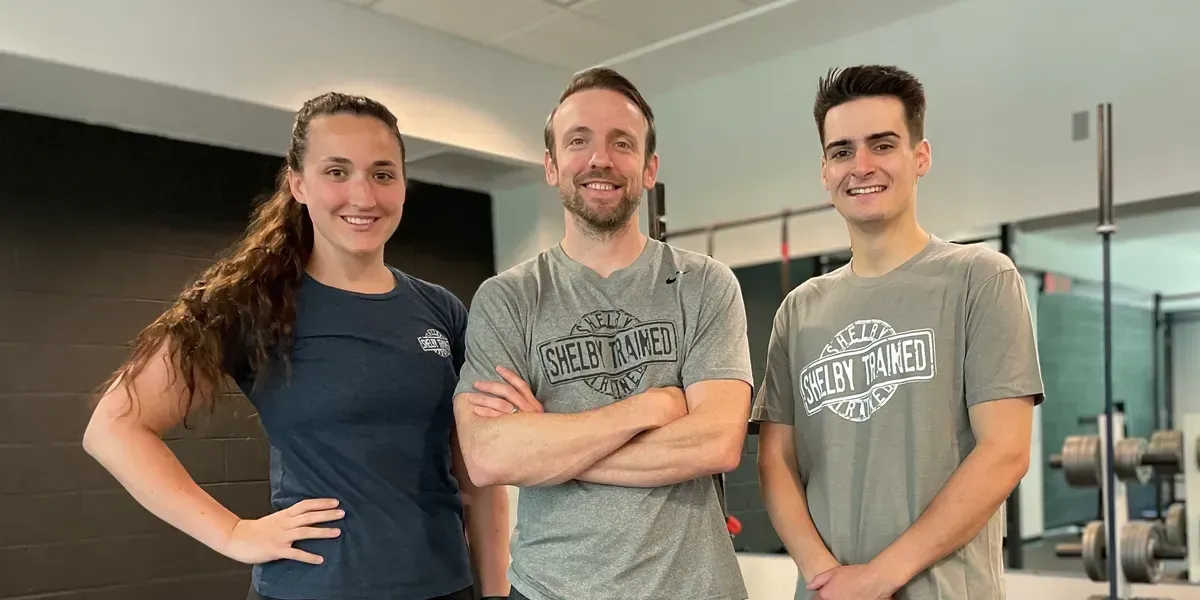
Our Team believes in providing a personalized approach to ensure your results. We are purposeful in everything from the workouts, to the coaching, to the fun/safe environment.
Learn why people seek us out to help them change their lives!
ARTICLES

July 23, 2021
Not Popular, But It's Science

July 1, 2021
How to train around injuries

July 1, 2021
Speed - what it really is

April 28, 2021
The X factor
Copyright © 2023 Shelby Trained - All Rights Reserved.